
Every Kansas City driver knows the dance. You are cruising down a familiar stretch of road, maybe on Ward Parkway or somewhere along the Paseo, and suddenly a pothole appears out of nowhere, forcing a last second swerve or a bone rattling jolt through the whole car. Pothole season is practically its own part of the calendar here, and the damage it causes goes well beyond a temporary annoyance. Understanding why Kansas City gets hit so hard, and what that damage actually does to your vehicle, makes it a lot easier to catch problems before they turn into expensive repairs.
Why Kansas City Gets Hit So Hard By Potholes
Potholes form through a process called the freeze thaw cycle, and Kansas City’s climate is almost perfectly designed to produce it. Water seeps into small cracks in the pavement, then freezes when temperatures drop, expanding as it turns to ice and widening the crack in the process. When temperatures rise again, the ice melts, leaving a slightly larger gap than before. Repeat this cycle several times over the course of a Missouri winter, with its frequent swings between freezing nights and warmer days, and small cracks turn into full blown potholes remarkably fast.
Kansas City’s weather pattern is particularly prone to this because temperatures here do not stay consistently below freezing for long stretches the way they might further north. Instead, the region experiences repeated freezing and thawing throughout the winter months, which means the pavement damaging cycle happens over and over rather than just once or twice a season. This is a big part of why local roads seem to develop new potholes every year almost like clockwork.
What A Pothole Actually Does To Your Tires
Hitting a pothole, even a relatively shallow one, can cause immediate and sometimes invisible damage to your tires. The impact can create a bulge in the sidewall, which happens when the internal structure of the tire is damaged even though the outer rubber looks intact. A bulging sidewall is a serious safety concern, since it significantly increases the risk of a sudden blowout, often without much warning beforehand.
Potholes can also cause tread separation, cracking, or in more severe cases, an immediate flat if the impact is hard enough to pinch the tire against the wheel rim. Even when the damage is not immediately obvious, repeated smaller impacts over the course of pothole season can weaken a tire’s structure gradually, shortening its lifespan considerably compared to a tire that never encountered rough pavement.
How Potholes Throw Off Your Alignment
Wheel alignment refers to the precise angles at which your tires meet the road, and it is a carefully calibrated setting designed to keep your vehicle tracking straight and wearing tires evenly. A hard pothole impact can knock these angles out of specification almost instantly, particularly when the hit is uneven, affecting one side of the vehicle more than the other.
Once alignment is off, you may notice your car pulling slightly to one side, a steering wheel that sits crooked even when driving straight, or tires that begin wearing unevenly, with one edge wearing down faster than the rest of the tread. Left unaddressed, poor alignment accelerates tire wear significantly, meaning a single pothole impact can end up costing you both an alignment service and a set of tires replaced well before they should have needed it.
Suspension Damage Is Often The Hidden Cost
Beyond tires and alignment, potholes put significant stress on suspension components including struts, shocks, control arms, and bushings. A hard enough impact can bend a control arm, damage a strut, or wear down bushings faster than normal use would ever cause. These issues do not always announce themselves immediately, sometimes developing into noticeable clunking noises, a rougher ride, or reduced handling precision only after several pothole encounters have compounded the damage over time.
Struts and shocks in particular are worth watching closely during a heavy pothole season, since their job is to absorb the impact of rough pavement in the first place. A strut that has already taken repeated hits may start to leak fluid or lose its ability to dampen bumps effectively, which shows up as a noticeably bouncier ride or a car that feels less planted through curves than it used to. Once a strut is compromised, it also loses some of its ability to protect the rest of the suspension from future impacts, which can accelerate wear on nearby components as well.
Warning Signs Worth Paying Attention To
After hitting a significant pothole, or after a full season of smaller impacts, a few signs suggest it is time for an inspection. A vehicle that pulls noticeably to one side, a steering wheel that vibrates or feels different than usual, uneven tire wear patterns you can see or feel when running a hand across the tread, and any new clunking or knocking sounds when driving over bumps are all worth having checked. Catching these symptoms early usually means a simpler repair than waiting until the damage compounds into something more serious.
For a broader look at keeping your vehicle in good shape given everything Kansas City roads and weather throw at it, our guide on how to extend the life of your vehicle in Kansas City covers additional maintenance habits that pair well with staying ahead of pothole related damage specifically.
Why A Mobile Mechanic Makes Sense During Pothole Season
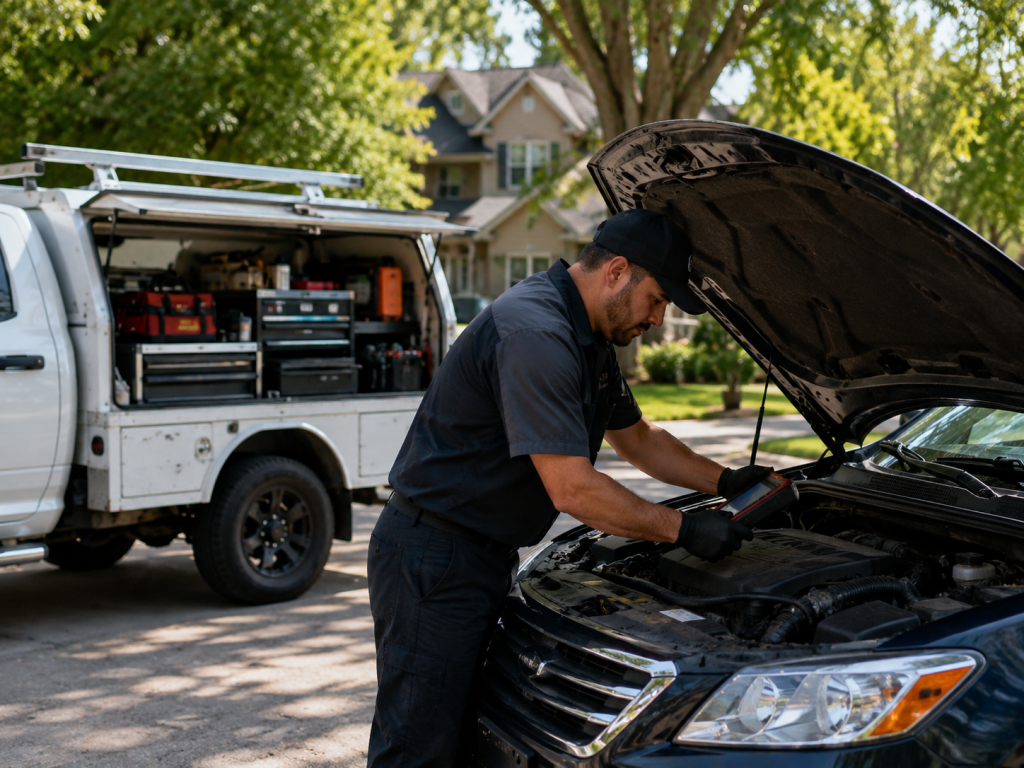
Given how sudden pothole damage tends to be, having a technician come to you rather than scheduling a shop visit days later can make a real difference, especially if you are dealing with a tire that is losing air or a noticeable pull that makes highway driving feel less safe. A mobile mechanic can inspect your tires, check alignment, and evaluate suspension components right where your car is parked, without the added stress of driving a potentially damaged vehicle across town.
We covered the broader benefits of this approach in our article on why mobile mechanics are better than traditional auto shops in Kansas City, which explains how convenience and quick response times come together, particularly useful during a season when pothole damage can happen with no warning at all.
Stay Ahead Of Pothole Season This Year
Kansas City’s freeze thaw cycle is not going to change, which means pothole season will keep returning every year no matter how many roads get repaved. Building a habit of checking your tires and paying attention to how your car handles after a rough winter can help you catch damage early, before a small alignment issue turns into a costly set of replacement tires or a suspension repair. Even a quick visual check of your tire sidewalls after a particularly hard hit takes only a minute and can catch a bulge before it turns into a blowout on the highway.
If you have recently hit a significant pothole or noticed any of the warning signs covered here, visit our homepage to learn more about our inspection services, or head to our contact us page to schedule a visit wherever your vehicle happens to be.
Catching pothole damage early is one of the simplest ways to protect your tires, your alignment, and your wallet through another Kansas City winter and spring.