
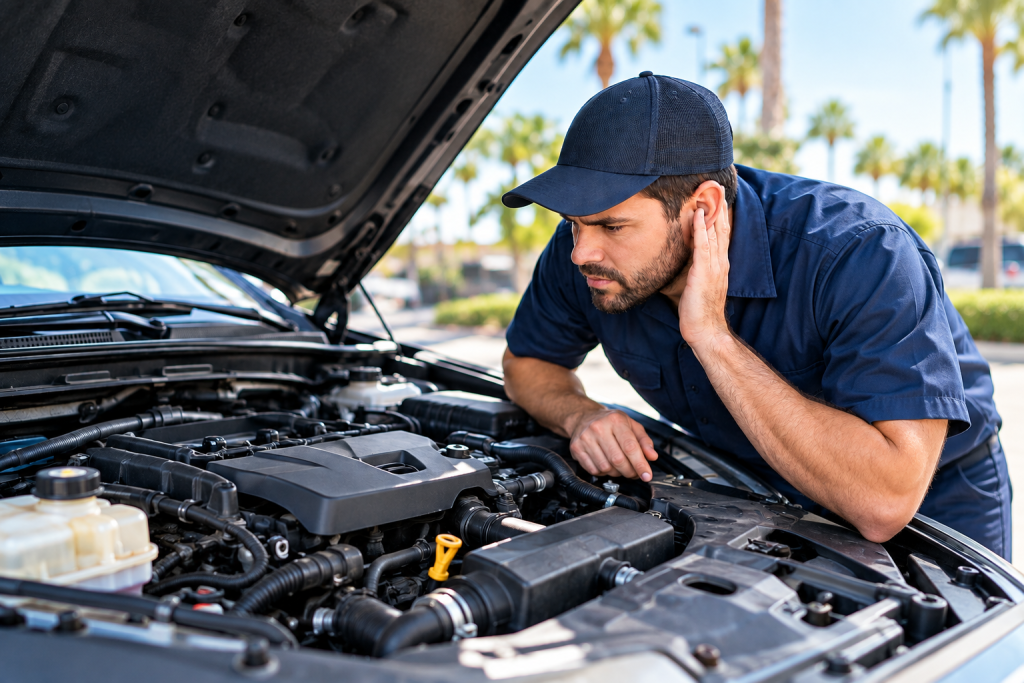
A car battery rarely gives much notice before it quits. One morning the engine cranks slowly, or clicks, or does nothing at all, and you are suddenly late and stuck. The good news is that batteries follow fairly predictable patterns, and knowing how long they typically last and what the warning signs look like can help you replace yours on your own schedule instead of on the side of the road.
This guide covers how often batteries should be replaced, what shortens their life in Kansas City’s climate, and the signs that tell you it is time for a new one.
How Long Does a Car Battery Usually Last?
Most conventional car batteries last about three to five years. Some premium batteries last longer, and some wear out sooner depending on the conditions they live in. Newer vehicles with start stop systems and heavy electronics often use absorbed glass mat batteries, which are built for greater demands and can last somewhat longer, though they are still not permanent.
These numbers are averages, not guarantees. A battery in a mild climate with regular long drives may last six years or more, while one that endures extreme weather and short trips may fail in under three. That is why age alone should not be the only thing you watch.
Why Kansas City Is Hard on Batteries
Kansas City swings between extremes. Summers are hot and humid, with long stretches of heat that accelerate chemical wear inside a battery. Heat causes internal fluid to evaporate and speeds up corrosion of the plates. Winters can be bitterly cold, and cold reduces the power a battery can deliver while also making the engine harder to turn over.
The combination is the real problem. A battery that gets weakened by months of summer heat often fails on the first cold morning, which is why so many drivers think of winter as the season that kills batteries, when summer did much of the damage. Testing before the temperature drops is one of the smartest steps you can take.
Other Factors That Shorten Battery Life
Climate is only part of the picture. Several habits and conditions affect how long a battery lasts:
- Frequent short trips, which do not give the alternator enough time to fully recharge the battery
- Leaving lights, chargers, or accessories on while the engine is off
- A failing alternator that undercharges or overcharges the battery
- Loose or corroded terminals that interfere with current flow
- Heavy electrical loads from aftermarket stereos, lighting, or accessories
- Vibration from rough roads or a loose hold down bracket
- Letting the battery sit unused for long periods
Vibration is worth a special mention for local drivers. Rough pavement and potholes shake everything under the hood, and a battery that is not secured firmly can suffer internal damage over time. Our article on pothole season and what KC roads do to your tires and alignment explains how rough roads affect other parts of your car as well.
Warning Signs That Your Battery Is Failing
Batteries usually give hints before they die, if you know what to look for.
Slow cranking is the classic sign. The engine turns over sluggishly, as if it is struggling to start. A healthy battery cranks quickly and confidently.
Dim lights and electrical glitches are another clue. Headlights that look weak, interior lights that flicker, or a radio that resets itself can all point to a battery that is not delivering steady power.
A clicking sound when you turn the key suggests there is not enough power to engage the starter. Repeated clicking is often a sign of a very weak battery.
The battery warning light on your dashboard can indicate a problem with the battery or the charging system. Do not ignore it, even if the car still starts.
Corrosion on the terminals, which looks like white, blue, or green crusty buildup, can mean leaking or aging. A swollen or bulging battery case, which is often caused by extreme heat, is a sign that the battery should be replaced right away. A sulfur or rotten egg smell around the battery can indicate a leak and also calls for immediate attention.
Finally, age matters. If your battery is approaching or past the four year mark, it deserves a test even if it seems fine.
Is It the Battery or Something Else?
A car that will not start does not always mean a bad battery. A failing alternator, a bad starter, loose cables, or a blown fuse can all cause similar symptoms. Replacing a battery without checking the charging system can lead to a second dead battery soon after. A proper test checks the battery’s capacity under load and confirms the alternator is charging correctly. If you are not sure what is going on, our guide to the top 10 reasons your car won’t start and how to get back on the road can help you narrow down the possibilities.
How Is a Battery Tested?
A technician uses a battery tester that measures the battery’s voltage and its ability to deliver current under load, often called cold cranking amps. A battery can show a normal voltage when rested and still fail under real starting demand, which is why a simple voltage check is not enough. The tester gives a clear result of good, weak, or replace, and the technician also checks the terminals, cables, and charging system.
How Often Should You Have Your Battery Tested?
A good rule is to test the battery once a year after it reaches about three years old, and to schedule the test before summer and again before winter if you want extra confidence. If the battery is newer, a test at your regular service visits is usually enough. Many drivers find it easy to combine a battery test with an oil change or seasonal inspection.
Tips to Make Your Battery Last Longer
You cannot make a battery last forever, but you can help it reach the high end of its lifespan. Keep the terminals clean and tight. Make sure the battery is firmly secured so it does not bounce around. Take longer drives occasionally to let the alternator fully recharge it. Turn off lights and accessories before shutting off the engine. Park in a garage or shaded spot when possible to limit heat exposure. Fix any charging problem promptly, since an alternator that is not working properly will ruin a good battery quickly.
Replace It Before It Fails
Waiting for a battery to die completely is a gamble. It can happen in a parking lot at night, on a freezing morning, or while you are running late. Replacing a battery on a planned schedule, usually somewhere between year three and year five, costs the same as replacing it after it fails, without the towing fees, missed appointments, and stress.
Why Mobile Battery Service Makes Sense
Battery replacement is one of the best jobs for a mobile mechanic. The technician comes to you, tests the battery and charging system, and installs the new battery right where the car is parked, usually in a short visit. You avoid a tow, a shop wait, and the difficulty of getting around with a car that will not start.
To learn more about our services, visit our homepage. If your battery is aging or showing warning signs, reach out through our contact us page and we will come to you anywhere in the Kansas City area.