
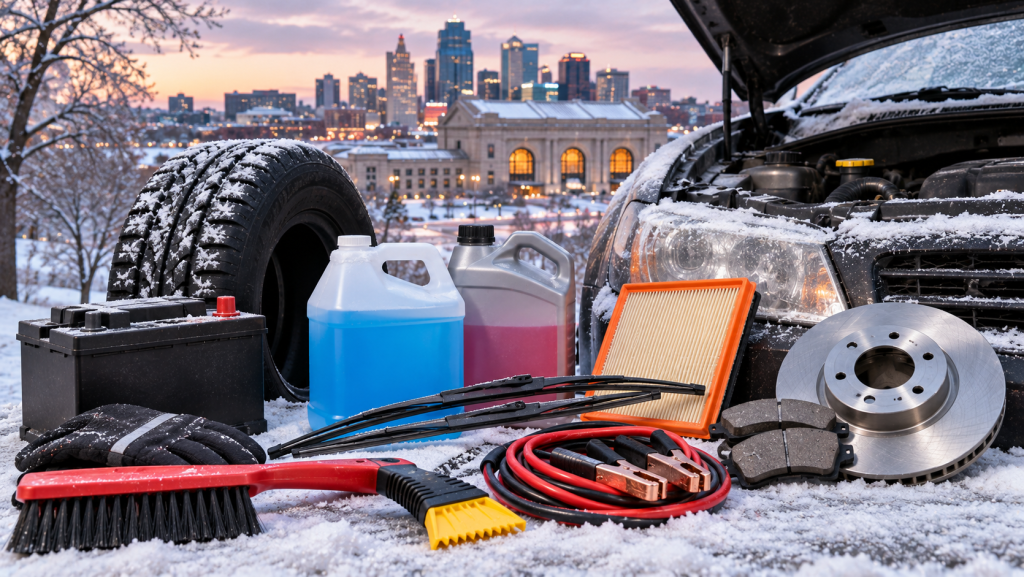
Kansas City winters are unpredictable. One week can bring a mild, sunny afternoon, and the next can bring a sheet of freezing rain, a foot of snow or a sudden plunge in temperature that turns every road into a skating rink. That swing is exactly what makes winter so hard on cars. Batteries that were fine in October fail on the first cold morning, tires that handled summer rain struggle on ice, and small problems you never noticed turn into stranded evenings. The good news is that a handful of simple steps, done before the worst weather arrives, can prevent most winter breakdowns. This guide walks you through them one at a time so you can get your car ready for a Kansas City winter without stress. If you are searching for winter car maintenance in Kansas City, start with this list.
Why Kansas City Winters Are Tough on Cars
The Kansas City area sees a mix of everything winter can throw: bitter cold snaps, snow, sleet, ice storms and plenty of freeze and thaw cycles. Crews treat roads with salt and brine, which helps traction but also speeds up corrosion on metal parts underneath your car. Repeated freezing and thawing breaks up pavement and creates potholes. Cold air thickens fluids, weakens batteries and lowers tire pressure. Short winter days mean more driving in the dark. Each of these factors puts stress on a different part of your vehicle, so a good plan covers several systems at once.
Step One: Test the Battery
The battery is the most common cause of winter no starts. Cold slows the chemical reaction that produces electricity, so a battery delivers less power just when your engine needs more to turn over thick oil. A battery that barely worked through summer, especially after heat wear, may have nothing left to give on a freezing morning.
- Have it tested before the first hard freeze. A quick test shows how much life is left.
- Inspect the terminals and cables. Look for crusty buildup, loose connections or damaged cable ends.
- Watch for warning signs. Slow cranking, dim headlights, a clicking sound or a battery warning light all point to trouble.
- Consider the age. An older battery is more likely to fail in the cold. Our post on how often to replace your car battery explains what to look for.
If a battery is swollen, cracked or leaking, do not try to jump start it, and have a professional handle it.
Step Two: Look at Your Tires
Tires are the only thing connecting your car to a slick road, so they deserve close attention.
- Check tire pressure often. Pressure drops as the temperature falls. Use the number on the sticker in the driver’s door jamb or in your owner’s manual, and check when the tires are cold.
- Measure the tread. Worn tread cannot clear snow and slush well. If it is low or uneven, plan to replace the tires.
- Look for damage. Cracks, bulges and cuts can turn into failures in the cold.
- Think about winter tires. Tires built for cold use a rubber compound that stays flexible at low temperatures and treads designed for snow. Ask a technician whether they make sense for how and where you drive.
- Check the spare, if your vehicle has one.
Kansas City roads can be hard on tires and alignment, especially once freeze and thaw cycles start breaking up the pavement. Our post on pothole season and what KC roads do to your tires and alignment explains why it is worth checking both before and after winter.
Step Three: Inspect the Brakes
Stopping on snow and ice takes longer, which means your brakes need to be in good shape. Have them inspected if you notice squealing, grinding, a soft or spongy pedal, vibration or pulling to one side. Brake fluid should be at the right level and in good condition, and your owner’s manual lists when it should be serviced. If anything feels off, have it checked before the roads get slick.
Step Four: Refresh Your Wipers and Washer Fluid
Visibility is everything in a snowstorm. Wiper blades harden and crack over time, and a worn blade can smear slush across the glass. Replace blades that streak, skip or chatter, and consider blades made for winter conditions. Fill the washer reservoir with a fluid rated for freezing temperatures, and carry a spare jug. Road spray from salt and brine can coat the windshield quickly, so you will use more fluid than you expect.
Step Five: Check Fluids and the Cooling System
- Coolant. Antifreeze keeps the engine from freezing and from overheating. Make sure the level is right and the mixture is appropriate for cold weather. Never open the radiator or coolant cap when the engine is hot.
- Engine oil. Check the level and make sure you are using the grade recommended in your owner’s manual for cold weather.
- Brake fluid and power steering fluid. Check the levels and condition according to your manual.
- Washer fluid. Use a winter rated fluid, as noted above.
Step Six: Test Your Lights
Winter days are short, and snow, sleet and fog reduce visibility. Check headlights, brake lights, turn signals, hazard lights and fog lights. Replace anything dim or burned out, and keep the lenses clean and clear of snow and ice. Good lights help you see and help others see you.
Step Seven: Inspect Belts, Hoses and the Heater
Cold makes rubber brittle. Belts and hoses with cracks, fraying or bulges are more likely to fail on a freezing day, which can lead to charging problems, overheating or loss of power steering assist. Make sure the heater and defroster work well before you need them. Weak heat, foggy windows that do not clear or strange smells from the vents are signs to have the system looked at.
Step Eight: Check the Exhaust
During winter you spend more time with windows up and the heater running. A leaking exhaust can allow carbon monoxide into the cabin, which is dangerous. If you hear a loud exhaust, a rattle underneath or smell exhaust fumes inside the car, have it inspected right away. Never run the engine in a closed garage, and keep the tailpipe clear of snow.
Step Nine: Protect the Body and Undercarriage
Salt and brine can eat away at paint and metal, especially on the underside of the car. Wash the vehicle regularly during winter when temperatures allow, and rinse the undercarriage to remove salt. A coat of wax before winter can add a layer of protection. Make sure door seals are in good condition, since frozen doors and trunks are a common winter annoyance.
Step Ten: Pack a Winter Emergency Kit
A breakdown in freezing weather is serious. Keep a kit in the car with:
- A phone charger or power bank.
- A flashlight with fresh batteries.
- Warm blankets, gloves, a hat and extra layers.
- An ice scraper and snow brush.
- A small shovel.
- Jumper cables or a portable jump starter.
- Sand or cat litter for traction.
- Bottled water and non perishable snacks.
- Reflective triangles or flares.
- A first aid kit.
- Your owner’s manual and insurance information.
Smart Winter Driving Habits
- Keep the gas tank at least half full. It helps prevent fuel line problems and gives you a reserve if you get stuck.
- Clear all snow and ice from the roof, hood, windows and lights before you drive.
- Slow down and leave extra space. Stopping distances grow a lot on ice and snow.
- Brake and steer gently, and avoid sudden moves.
- Watch for black ice, especially on bridges, overpasses and shaded areas.
- Avoid cruise control on slick roads.
- Stay home during ice storms when you can.
- Check local road conditions and weather alerts before heading out.
How a Mobile Mechanic Can Help
Winter prep is one of those chores that is easy to put off until the first storm, and then nobody wants to stand in a cold parking lot waiting for service. A mobile mechanic can come to your home or workplace to test the battery, inspect the tires, brakes, belts and hoses, check fluids and handle many common repairs on the spot. That means you can get ready for winter without giving up your day. Some work needs specialized equipment and may require a shop, and a good technician will tell you plainly what can be done at your location.
Your Winter Prep Checklist
- Test the battery and clean the terminals.
- Check tire pressure, tread and condition.
- Have the brakes inspected.
- Replace worn wipers and fill the washer reservoir with winter fluid.
- Check coolant, oil and other fluids.
- Test all lights.
- Inspect belts, hoses, the heater and the defroster.
- Check the exhaust system.
- Wash off salt and protect the finish.
- Pack a winter emergency kit.
A little preparation now can save you from a bad morning later. If you would like help getting your car ready for winter, visit our homepage to learn more, or contact us to schedule a visit.